 Labab Journal for Strategic Studies
Germany after the Russian War on Ukraine: From “Civilian Power” to Rearmament
This study examines Germany’s strategic transformation following the Russian war on Ukraine by analysing the shifts in its security and defence policies and the reassessment of the “civilian power” model that shaped Germany’s role since the end of the Cold War. The study explores the historical foundations of German strategic culture and the changes introduced under the “Zeitenwende” framework, including rearmament, increased defence spending, and the expansion of Germany’s role within NATO and the broader European security architecture. It also analyses the impact of the war on German energy policy, German-Russian relations, and the reconstruction of Germany’s defence industrial base, alongside the growing doubts regarding the long-term reliability of US security guarantees that have encouraged Berlin to adopt a more autonomous security posture. The study concludes that Germany has entered a phase of redefining its strategic role in Europe, although the sustainability of this transformation will depend on Berlin’s ability to balance military expansion with economic sustainability and domestic political and social consensus
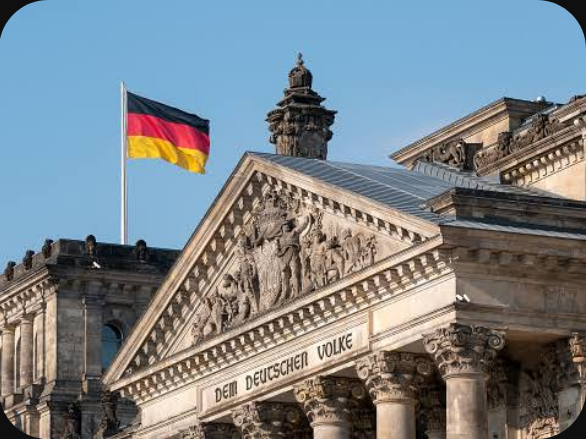
On February 27, 2022, former German Chancellor Olaf Scholz delivered a landmark address before the Bundestag regarding his country's position on the Russian invasion of Ukraine—a speech subsequently known as the "Historic Turning Point" (Zeitenwende-Rede). This address marked a pivotal inflection point in German security policy, signaling the end of a long era in which German strategy rested on military restraint, the primacy of economic and diplomatic tools, and multilateral institution-building to manage security threats. This traditional orientation was tied to a cautious approach toward out-of-area military deployments and an extensive network of economic interdependence, most notably with Russia in the energy sector.
The Russian invasion of Ukraine delivered a strategic shock that compelled Berlin to reassess many of the baseline assumptions governing its foreign and security policy since the end of the Cold War. Germany confronted a transformed European security environment characterized by the erosion of long-term stability assumptions, the resurgence of deterrence, geopolitical conflict, and great-power competition. Within this context, Germany initiated a redefinition of its status within the European and transatlantic security frameworks—encompassing increased defense spending, expanded military commitments within NATO, and a fundamental overhaul of its energy policies and relations with Russia.
The significance of this transformation extends well beyond German borders. As Europe’s largest economic power, Germany occupies a pivotal role within both the European Union and NATO. Consequently, any shift in its security and defense posture directly impacts the future of European defense, collective security dynamics on the continent, and burden-sharing mechanisms within the Atlantic Alliance. Moreover, this transition intersects with broader debates concerning European leadership, the limits of security reliance on the United States, and the feasibility of constructing a more autonomous European defense capability.
This study aims to assess the trajectory and limits of the German security transformation since 2022, specifically in the wake of the Russian invasion of Ukraine. It questions whether the measures announced by Berlin—such as establishing a special fund to modernize the Bundeswehr (German Armed Forces), raising defense spending, bolstering NATO commitments, and reorienting energy policies—reflect a genuine strategic shift or remain constrained by cultural, political, and institutional factors that inhibit Germany’s emergence as a fully realized strategic actor.
The study analyzes the evolution of German security policy, its implications for the European security order, and Germany’s capacity to transition from an economically influential "civilian power" into a more assertive strategic actor in European defense equations. It seeks to answer the central question: To what extent has German security policy transformed since the "Zeitenwende" speech, and what factors are driving or constraining this trajectory?
I. The Historical Foundations of German Security Policy
1. Post-WWII German Strategy
The foundations of modern German security policy were forged in the immediate aftermath of World War II. The Nazi experience and the devastation of total war cultivated a deep societal and political rejection of military force as an instrument of state policy. Consequently, security in the German political consciousness became inextricably linked with economic reconstruction, political stabilization, and integration into Western institutions. This consensus crystallized into what scholars describe as postwar Germany's "strategic culture"—characterized by antimilitarism, a preference for multilateralism, and reliance on diplomacy over military coercion.
This orientation was clearly embedded in the 1949 Basic Law (Grundgesetz), which, while not prohibiting the creation of armed forces, imposed strict constraints on military activity and subjected the Bundeswehr to rigorous parliamentary oversight. The trauma of the past rendered rearmament a deeply controversial issue, accepted only under the imperatives of the Cold War. Within this framework, West Germany joined NATO in 1955, establishing its armed forces within institutional arrangements designed to reassure both domestic and international audiences that German military power would remain strictly bounded within a multilateral structure.
This early period established three core pillars of German strategic culture:
Military Restraint: Confining the use of force to cases of absolute necessity and strictly within international alliances.
Multilateral Legitimacy: Relying on NATO, European institutions, and later the EU as the governing frameworks for security policy.
The "Civilian Power" Paradigm: Prioritizing diplomacy, economic instruments, and rules-based cooperation.
These pillars became deeply institutionalized within the German political architecture, continuing to guide security policy even after the geopolitical landscape that birthed them underwent fundamental shifts.
2. German Security Policy Between the Cold War and Reunification
During the Cold War, West Germany occupied a frontline position in the confrontation between the Eastern and Western blocs; yet this did not lead to the adoption of a conventional power-projection posture. NATO strategy relied heavily on Allied forces stationed on German soil, particularly U.S. nuclear and conventional capabilities. In this context, the Bundeswehr developed as a highly capable defensive force designed primarily to protect German territory and deter potential threats within the alliance, rather than to project force beyond its borders.
German Chancellors—from Konrad Adenauer to Helmut Kohl—maintained that integration into Western alliances formed the bedrock of German security. Concurrently, the Ostpolitik (Policy of Reconciliation with the East) initiated by Willy Brandt opened a parallel track of engagement with the Soviet bloc and Eastern Europe. This dual-track approach, combining deterrence with diplomatic engagement, enhanced stability in Central Europe and entrenched the notion that security could be achieved through economic and political interdependence alongside collective military arrangements.
The end of the Cold War and German reunification in 1990 marked a critical juncture. Reunification accorded Germany greater geopolitical weight, yet political leaders refrained from abandoning their cautious strategic posture. Instead, they presented unified Germany as a responsible power committed to European integration, transatlantic cooperation, and regional stability.
Nevertheless, the 1990s revealed a growing gap between Germany’s traditional strategic culture and post-Cold War security realities. The armed conflicts in the Balkans impelled Berlin to reconsider its long-standing reluctance to participate in military operations beyond territorial defense. A pivotal moment occurred in 1994 when the Federal Constitutional Court ruled that German forces could participate in out-of-area operations within multilateral frameworks and under international mandates. This ruling paved the way for broader German engagement in peacekeeping and stabilization missions, though such deployments were framed as exceptional, circumstance-specific measures rather than a shift toward an expansionist posture. Military restraint remained a central tenet of German strategic culture.
3. Entrenchment of the "Civilian Power" Model
In the post-Cold War era, Germany emerged as a archetype of what political literature terms a "Civilian Power" (Zivilmacht)[4]—a concept denoting a state’s reliance on political, economic, and legal mechanisms to shape the international environment while minimizing military force. Developed prominently by scholars such as Hanns W. Maull[5], this concept posits that German foreign policy prioritizes multilateralism, legal legitimacy, and economic cooperation. Berlin positioned itself as a leading proponent of cooperative security, conflict prevention, peacekeeping, and development assistance.
This approach was reinforced by several structural and political factors:
Erosion of Direct Military Threats: The collapse of the Soviet threat reduced the perceived necessity for high defense spending.
Geoeconomic Primacy: Commercial and economic engagement gained centrality in German foreign policy, rooted in the conviction that trade fosters political stability (Wandel durch Handel / Change Through Trade).
Constitutional and Societal Constraints: Domestic skepticism regarding foreign military interventions restricted the expansion of defense capabilities and out-of-area deployments.
Germany’s participation in NATO and EU missions after 1999—in Kosovo, Afghanistan, and later Mali—demonstrated an increased willingness to employ military tools. However, these engagements remained largely humanitarian, multilateral, and limited in scope, operating under strict rules of engagement that emphasized stabilization, logistics, and training over direct combat.
By the second decade of the 21st century, debate intensified within NATO and Europe regarding Germany's security role. Western allies urged Berlin to assume greater responsibility amid deteriorating relations with Russia, instability in the Middle East, and growing pressures for NATO burden-sharing. Despite calls for a more assertive posture—such as President Joachim Gauck's speech at the 2014 Munich Security Conference—shifts in Germany's strategic approach remained incremental, constrained by a historical legacy of political and cultural caution.
II. The Strategic Shift: Drivers and Political Contexts
1. The Russian Invasion of Ukraine as a Strategic Shock
The Russian invasion of Ukraine on February 24, 2022, shattered the foundational premises of German foreign and security policy. For decades, Berlin operated on the premise that economic interdependence and diplomatic engagement could nudge Russia toward cooperative behavior. The invasion exposed the limits of this approach and laid bare Germany's strategic vulnerability resulting from its heavy reliance on Russian energy imports.
Prior to the war, Russia supplied approximately 55% of Germany’s natural gas, 50% of its coal, and over a third of its crude oil imports[6]. This deep dependency created significant strategic exposure, particularly as German heavy industries—such as chemicals, steel, and manufacturing—had built their competitiveness on relatively cheap Russian energy inputs.
The abrupt disruption of this supply architecture induced severe inflationary pressures and industrial strain. Annual inflation peaked above 8.8% in autumn 2022 (averaging 6.9% for the year)[7], accompanied by output contractions in energy-intensive sectors. The federal government responded by deploying massive stabilization packages exceeding €200 billion (Doppelwumms) to shield households and businesses[8], underscoring the direct link between geopolitical shocks and domestic economic stability.
Russia's full-scale use of military force to alter borders represented a threat category Berlin considered obsolete in post-Cold War Europe. In response, Chancellor Olaf Scholz delivered his historic Zeitenwende speech on February 27, 2022[1], announcing:
The creation of a €100 billion Special Fund (Sondervermögen) for Bundeswehr modernization[3].
A commitment to meet NATO’s 2% GDP defense spending threshold.
Reinforced military deployments on NATO’s Eastern Flank.
Substantial military and financial support for Ukraine.
From a strategic perspective, the invasion delivered a double shock: it highlighted the failure of economic engagement to prevent aggression, while exposing structural deficiencies within the Bundeswehr caused by years of underinvestment[9,10].
2. Coalition Dynamics and Political Realignment
The implementation of the Zeitenwende was shaped by the internal dynamics of Germany's governing coalition—comprising the Social Democratic Party (SPD), the Greens, and the Free Democratic Party (FDP).
The SPD: Historically tied to Ostpolitik, the party faced internal debates over the scope of military escalation, balancing Scholz’s commitments against traditional anti-militarism.
The Greens: Led by Foreign Minister Annalena Baerbock, the party adopted a surprisingly hawkish stance, advocating robust military assistance to Ukraine and framing security in terms of moral and strategic necessity.
The FDP: Led by Finance Minister Christian Lindner, the party strongly backed defense expenditures but firmly insisted on maintaining constitutional debt controls (Schuldenbremse), generating friction over long-term funding mechanisms.
Despite initial international criticism regarding the pace of weapons deliveries[11], the coalition executed major policy shifts, including supplying heavy armor (Leopard 2 tanks, Iris-T systems, PzH 2000s) and committing a permanent brigade to Lithuania[10].
3. Public Opinion and Cultural Shifts
Public opinion underwent notable shifts post-2022. Initial polls reflected broad support for aiding Ukraine and raising defense spending. Surveys by the Körber Foundation[11] and Forschungsgruppe Wahlen[12] indicated a gradual erosion of the post-WWII anti-military consensus. While younger cohorts demonstrated greater openness to an active defense role, broader public support remained tempered by economic concerns and fears of military escalation with Russia[13].
III. Military Modernization and Defense Reform
1. The €100 Billion Special Fund and Execution Challenges
The establishment of the Sondervermögen Bundeswehr represented the financial centerpiece of the Zeitenwende[3]. By combining the special fund with the core budget, German defense spending reached over €90 billion in 2024 (approx. 2.01% of GDP), fulfilling the NATO target for the first time in decades[14].
| German Defense Metrics | Pre-Zeitenwende (2021) | Post-Zeitenwende (2024) |
| Core Defense Budget | ~€52.8 Billion | ~€52.0 Billion |
| Special Fund Allocations | €0 | ~€19.8 Billion (annualized draw) |
| Total NATO-Reported Defense Expenditure | ~€34.1 Billion (1.49% GDP) | ~€90.6 Billion (2.01% GDP)[14] |
| Active Military Personnel | ~183,000 | ~181,500 (Target: 203,000 by 2031) |
Despite these financial gains, execution encountered procurement bottlenecks within the Federal Office of Bundeswehr Equipment, Information Technology and In-Service Support (BAAINBw). Inflation also diminished the real purchasing power of allocated funds.
A critical fiscal challenge looms for 2027/2028 when the Special Fund is fully exhausted. Maintaining the 2% GDP target will require absorbing an estimated €30–40 billion deficit into the core federal budget—a task constrained by constitutional debt limits.
2. Capability Gaps and Procurement
Under Defense Minister Boris Pistorius, Germany published updated Defense Policy Guidelines (Verteidigungspolitische Richtlinien 2023), emphasizing readiness for war (Kriegstüchtig). Major procurement programs were initiated:
Procurement of U.S. F-35A fighters for nuclear sharing missions.
Heavy-lift CH-47F Chinook helicopters.
Israel's Arrow 3 missile defense system.
Recruitment remains a primary structural challenge. The Bundeswehr struggles to expand active personnel from 181,500 to the targeted 203,000 by 2031[21], prompting renewed debate over modifying selective service or military conscription (Wehrpflicht).
3. Defense Spending and Transatlantic Dependency
While the Zeitenwende boosted short-term military capabilities, Germany remains tethered to U.S. strategic guarantees. Concerns over shifting U.S. political priorities and burden-sharing demands have accelerated discussions regarding European defense self-reliance[16].
IV. Germany in the European and Transatlantic Security Architecture
1. Eastern Flank Deterrence
Germany expanded its operational role on NATO’s Eastern Flank, most notably through the historical commitment to permanently station an armored brigade (Panzerbrigade 45) in Lithuania comprising ~5,000 troops by 2027—marking Germany's first permanent overseas deployment since WWII[10].
2. European Defense Initiatives and Strategic Autonomy
Germany promoted regional security mechanisms, such as leading the European Sky Shield Initiative (ESSI)[17]. However, ESSI exposed divergence with France:
The German Approach: Focuses on immediate, pragmatic procurement combining U.S., Israeli, and domestic systems within NATO structures (Atlanticist Approach).
The French Approach: Emphasizes long-term European industrial sovereignty and reliance on European-designed platforms (Gaullist Approach).
The U.S. military footprint in Germany—encompassing 35,000 to 38,000 troops across critical hubs like Ramstein Air Base and EUCOM/AFRICOM headquarters in Stuttgart[23]—remains vital to continental deterrence[25].
3. The Franco-German Industrial Axis
Joint Franco-German defense programs reflect both strategic ambition and industrial friction:
Future Combat Air System (FCAS): Aiming to develop a 6th-generation fighter, but delayed by leadership rivalries between Dassault Aviation and Airbus[19].
Main Ground Combat System (MGCS): Intended to replace Leopard 2 and Leclerc tanks, facing divergent operational timelines and corporate competition[20].
V. Geoeconomics, Energy Security, and Strategic Autonomy
1. Rupture in Relations with Russia
The war forced a definitive break with Wandel durch Handel. Key steps included:
Halting the certification of Nord Stream 2[22].
Phasing out Russian pipeline gas, coal, and sea-borne crude imports.
Implementing comprehensive EU economic sanctions.
2. Energy Re-orientation and Industrial Risk
To replace Russian hydrocarbons, Germany implemented rapid measures:
Constructing Floating Storage Regasification Units (FSRUs) for LNG (e.g., Wilhelmshaven, Lubmin).
Diversifying gas imports toward Norway, the U.S., Qatar, and North Africa.
Accelerating renewable energy expansion (Energiewende) to achieve 80% green electricity by 2030.
Despite avoiding acute energy shortages, higher structural energy costs continue to pose risks of deindustrialization in energy-intensive manufacturing sectors.
3. Rebuilding the Defense Industrial Base
Defense contractors (e.g., Rheinmetall, Hensoldt, Diehl) expanded manufacturing capacities to sustain long-term ammunition and systems output[24], transforming defense production into a key pillar of national strategic resilience.
Conclusion and Assessment
The evolution of German security policy following the 2022 Zeitenwende demonstrates a significant transformation in capabilities, commitments, and strategic outlook.
Key Dimensions of Shift:
Geoeconomic Decoupling: Abandonment of energy reliance on Russia and the "Change Through Trade" doctrine.
Fiscal Commitment: Meeting NATO’s 2% GDP defense spending baseline via a dedicated €100 billion fund.
Operational Assertiveness: Transitioning from military restraint to forward deterrence (e.g., permanent brigade deployment in Lithuania).
Persistent Structural Constraints:
Fiscal Sustainability: Unresolved structural funding deficits following the Special Fund's depletion post-2027.
Procurement and Personnel Deficits: Bureaucratic friction and demographic limits impeding recruitment goals.
Strategic Culture: Deep-seated societal caution regarding unilateral military leadership in Europe.
Final Outlook: Germany is undergoing a complex transition from a traditional "civilian power" to an armed, defensively capable strategic actor. While the war in Ukraine dispelled long-held illusions regarding trade-based security, Germany's long-term strategic transformation will ultimately depend on its ability to resolve domestic fiscal constraints, reform its defense bureaucracy, and sustain a national political consensus that balances social democracy with geopolitical deterrence.
Kommentare (0)
Noch keine Kommentare. Schreiben Sie den ersten.