 Aljazeera
The Three Most Important Settings for iPhone Users: How to Protect Your Data Plan from Silent Drain While Traveling
The Three Most Important Settings for iPhone Users: How to Protect Your Data Plan from Silent Drain While Traveling
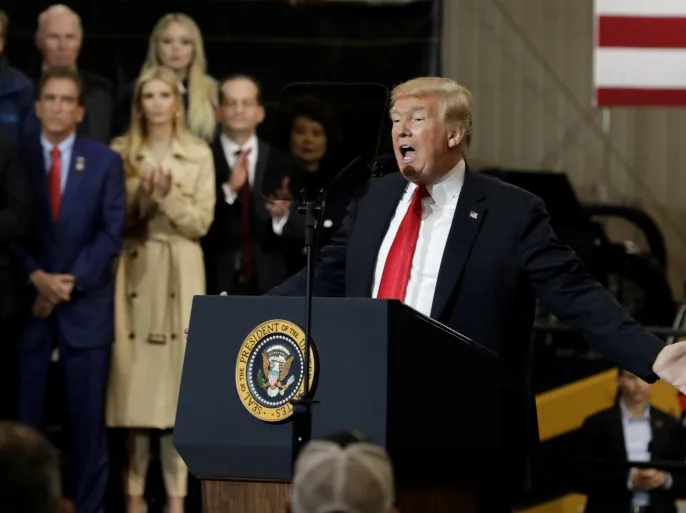
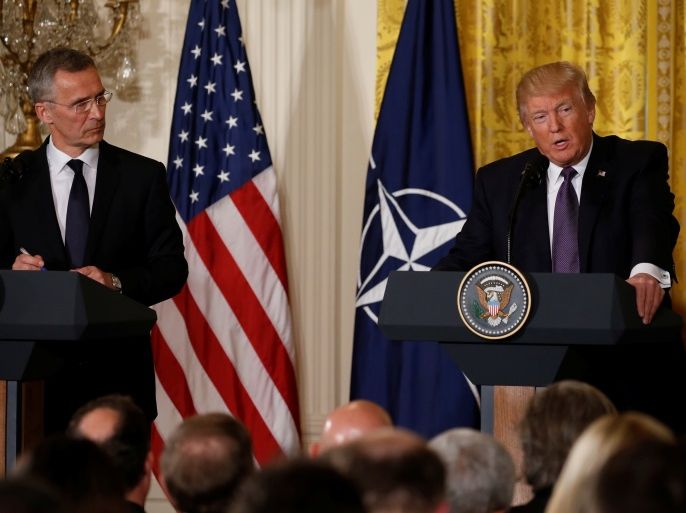
It is noteworthy that in his first statements about Syria after being elected President of the United States, Trump announced that he had different perceptions of the situation in Syria, indicating the defeat of the Islamic State as a strategic necessity in the context of settling the situation in Syria, without giving the overthrow of the Assad regime the highest priority in that plan, pointing to a reordering of American priorities that had been customary under Barack Obama; the current American estimates confirm that further security deterioration is occurring in Syria, the direct cause of which was the focus on finding armed opposition groups to support the war in Syria.
This stance was the predominant American view until recently, before the Syrian regime carried out a chemical attack on Khan Sheikhoun, which turned the equation, with Trump launching a military strike in Syria to discipline the Syrian regime for that incident.
| Iran's rise represents a real source of concern for Gulf countries, amid fears that its hostile policy towards the region will continue, and that communication with it will shake partners. |
Among the most important elements of Trump's vision for Syria is the expansion of the use of U.S. special operations forces, increasing the number of U.S. troops in the region, and granting the Pentagon additional powers to accelerate the decision-making process needed for the situation, as well as fulfilling promises made by Trump to establish isolated security zones in Syria, which Turkey has long advocated. In this regard, we may question the logical basis for Washington's rejection of Turkey's vision of an isolated zone, and it appears that the issue was linked to the timeframes that could be used to assess the strategic situation based on the latest developments on the ground in Syria, assuming the importance of the Kurdish element in the context of the American vision for any solution that could be forged in Syria later.
And if it is obvious that any security zone in Syria, guaranteed by the United States, requires a degree of military protection overseen by U.S. forces almost entirely, the Trump administration proposed involving Turkey and Russia in ensuring the implementation of such zones, with the boundaries of these security zones drawn by those powers.
Therefore, the Trump administration will find it impossible to drop from its calculations the strategic setbacks of clashes with Moscow and Iran over Syria, but at the same time it will face a very important issue: how to strike a deal that is accepted by other regional parties, such as Turkey, Saudi Arabia, and the Gulf states, all of whom are involved in the Syrian conflict.
Iran's rise represents a real source of concern for Gulf countries, amid fears that its hostile policy towards the region will continue, and that communication with it will shake these partners, thus requiring the Trump administration to make great efforts to address the concerns of all those parties, and Washington will eventually be forced to move in a circle of contradictions, reaching that result will push Washington to adapt its security policy, which was not acceptable under American strategic principles in previous periods.
| Israel closely monitors the course of the war in Syria and feels it is not isolated from its fires, amid rising geopolitical threats of the crisis. |
The essence of the matter, therefore, is to find effective measures to reduce the strategic ambiguity that surrounds President Trump's vision of Syria, and achieving it requires smart diplomacy to respond to multiple concerns, on the one hand the United States will benefit from all those parties in the war against the Islamic State, which is the most pressing goal according to the American saying, and there are in Washington people who think about this mentality seriously.
There is another variable no less important, which is Turkey's position in the context of the vision announced by Trump regarding Syria, the Turks have extreme sensitivities to the complexity of what is happening in Syria, and they view the multi-party American approaches in Syria with suspicion and doubt, especially the establishment of an isolated zone in northern Syria.
For Turkey, there is a clear equation: strengthening U.S. relations with the Kurds is a real danger that threatens national security, and is a tool for exploitation against Turkey, and the Turks have previously adopted more options in the context of protecting the unity of Turkish geography with the support of the United States itself.
Therefore, the American mission appears very arduous, given the presence of a multi‑party security environment that is contradictory in terms of interests and policies. Such a situation requires a management that is strategically flexible and effectively determined. Turkey is an important NATO member and plays a role in supporting U.S. coalition operations against the Islamic State. It can be relied upon as a strategic depth for managing military and security operations in the region, and its handling of concerns about Kurdish expansion in northern Syria will have a profound impact on ensuring its alignment with the United States.
On the contrary, this presents a complex problem with Ankara, which can exert pressure in its military operations by providing specialized weapons to the Syrian opposition to heighten the situation. It can reduce its logistical services and access facilitation at the "Engerlik" base, and may move toward drafting specific agreements with Moscow, given that Turkish politicians are ready to accept the idea of keeping Assad in power.
| What remains is that we must wait to see how Trump can proceed according to his vision for shaping a deal on Syria, which is tossed by twists in interests and whims. |
All of this is accompanied by the presence of Israel in the equation, which is an absent yet present party in any security negotiations regarding Syria. Israel closely monitors the course of the war in Syria and feels that it is not isolated from its fires, given the rising geopolitical threats of the crisis there. This has allowed Israel’s enemies – Iran, Hezbollah, and terrorists – to enhance their specialized military capabilities, putting Israeli security at constant risk. According to Israeli statements, establishing a buffer zone in Syria led by the United States could be an experiment to support the idea of creating a buffer zone on the Israeli‑Syrian border, to provide the greatest possible security and stability for the northern front and prevent the infiltration of terrorism into it, which can address Israel’s security concerns.
The conclusion of this analysis indicates that the U.S. forces arriving in Syria could bring a dramatic change in the course of operations in northern Syria, at the very least, but they will not bring a fundamental shift toward imposing a political settlement through the field that guarantees a viable solution in Syria. It is expected that the capabilities of the Islamic State and armed groups will weaken under the pressure of U.S. operations, but this does not mean that an early withdrawal of U.S. forces is possible. It is likely that the United States will maintain a permanent military presence in Syria, and it is not unlikely that the United States will propose establishing a new military base in that area, which would benefit Americans in balancing Russian influence in Syria, protecting Israel, and containing Iran.
In any case, we still have to wait to see how Trump can proceed according to his vision for shaping a deal on Syria, which is tossed by twists in interests and whims.
The opinions expressed in the article do not necessarily reflect the editorial stance of Al Jazeera network.
Comments (0)
No comments yet. Be the first to comment.